If you’re like me, you might be wondering why humanoid robots have suddenly exploded into reality. For decades they seemed to be going nowhere and then, like AI in 2023, they suddenly seemed to become much more possible.
Here’s a quick breakdown on what’s happened over the last few years.
For decades, humanoid robots were basically just really expensive tech demos. Sure, they looked cool at conferences, but everyone knew they were too slow, too fragile, and way too expensive to actually do anything useful. Then somewhere around 2023, things shifted. Companies started showing off robots that could actually walk without falling over, pick up boxes, use tools, and some of them cost less than a used Honda.
It happened fast. But the reason is pretty straightforward once you cut through the technical BS: robot joints finally got cheap.
Here’s what happened.
The problem was never the brain
Everyone assumes the hard part about building a humanoid is the AI, teaching it to think, to plan, to not walk into walls. But that wasn’t really the bottleneck.
The real problem? Joints.
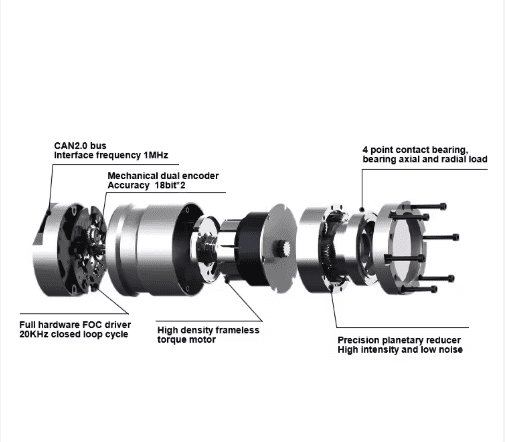
A humanoid robot has shoulders, knees, elbows, ankles, wrists, just like us. Engineers call these “actuators,” but they’re basically robot muscles. Each one is a motor plus gears plus sensors, all packaged together to make a limb move.
You need somewhere between 20 and 40 of these things to make a robot move like a person.
And for most of robotics history, each one cost *thousands of dollars*.
Do the math. Even before you add batteries, computers, sensors, or software, you’re looking at the price of a luxury car. Robots weren’t held back by intelligence. They were held back by expensive knees.
What changed
1. E-bikes accidentally saved robotics
When electric scooters and e-bikes exploded in the late 2010s, it created massive demand for small, powerful motors and cheap gears. Factories in China scaled up production to ridiculous levels – millions and millions of units.
When you make that many of something, it gets cheaper and better. Fast.
Suddenly there was this huge supply of exactly the parts robots needed, and the robotics industry didn’t even have to pay for the R&D. They just showed up and started buying.
2. China figured out how to make the fancy gearboxes
For a long time, the robotics world depended on Japan for something called a “harmonic drive.” A special type of gearbox that turns a motor’s fast spin into slow, powerful, precise movement with almost no wiggle.
It’s what makes robot motion look smooth instead of janky.
Only a few companies could make these well, so they were expensive as hell.
Around 2017–2023, Chinese manufacturers cracked the code. Their versions aren’t quite as perfect, but they’re good enough for most robots, and they cost a fraction of the price.
That broke the whole market open.
3. Everything got packaged into one piece
In the old days, building an actuator meant sourcing all the parts separately: motor, gearbox, sensors, electronics, wiring, housing. It was like building a car engine from scratch every single time.
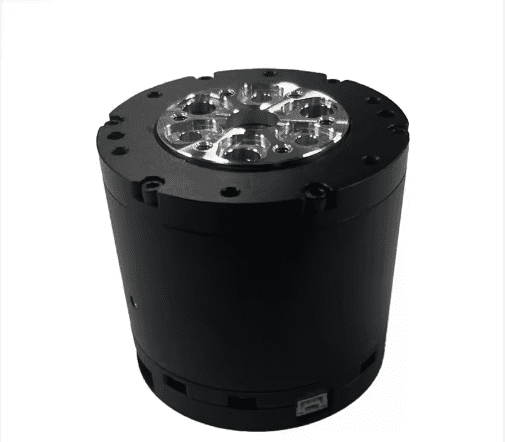
Then Chinese factories started selling all-in-one actuator modules. Pre-assembled robot joints you just bolt on and plug in.
Imagine buying a complete human elbow as a single unit. That’s the level of simplification we’re talking about.
Cheaper. Fewer things to break. Faster to build.
4. AI smooths out the rough edges
Old robots needed mechanically perfect joints. Any little vibration or slop in the gears would ruin the motion.
Now? AI-based control systems can adjust thousands of times per second to compensate for imperfections in the hardware.
The parts don’t need to be perfect anymore. They just need to be cheap and consistent enough for software to fix on the fly.
It’s like having a physical therapist inside the robot constantly tweaking every movement in real time.
5. Everyone piled in at once
Once humanoids started looking viable, the floodgates opened. Every startup, university lab, tech giant, and PhD student rushed into the space. More researchers = faster progress. More companies = cheaper components.
Humanoids became the “next big thing.” The new smartphone, the new EV.
6. The chip war helped (weirdly)
When the US blocked China from buying advanced chips, China went all-in on the physical side of robotics: motors, gearboxes, batteries, actuators.
Now you’ve got this weird situation where the West leads in AI compute and China leads in robot bodies.
Humanoids need both.
The competition sped everything up.
The real breakthrough
Five years ago, a single robot joint cost around $2,000.
Today you can buy one for $120.
A few years back, building a humanoid cost $150,000 or more.
Now companies are targeting the $20,000 range. Maybe lower.
That’s the breakthrough. Not some AI miracle. Just economics.
Everything else (the fancy demos, the motion control, the AI) is built on top of this one shift: cheap actuators.
Humanoid robots didn’t suddenly become possible because AI got smarter (although AI helped a lot).
They became possible because the muscles got cheap enough to mass-produce.
When the body gets affordable and the brain keeps improving every year, things move fast.
And China. Always China.