
Here are a few stories that caught my attention this week.
Humanoids in 2025 occupy a strange space. Public imagination is running far ahead of reality, yet the underlying capabilities are improving faster than most analysts predicted even two years ago. The last few months delivered a cluster of stories that perfectly capture this tension: disbelief, disruption, hobbyist breakthroughs, and new hybrid machines that challenge the very categories we use. Taken together, they show an ecosystem moving from speculative to inevitable.
Start with China, because everyone else does now.
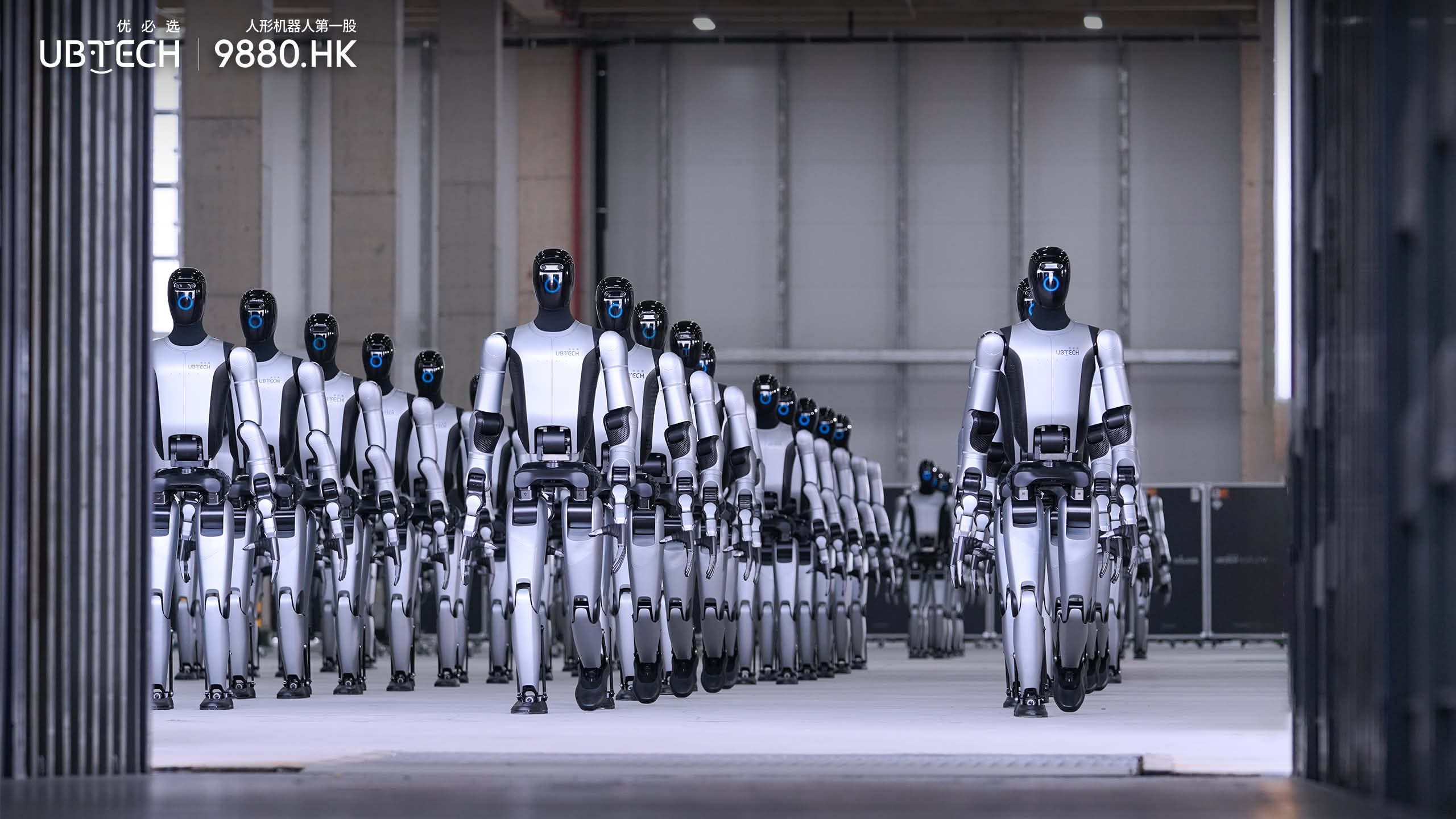
A recent photo from Ubtech of hundreds of their Walker S2 standing in military formation of humanoid robots triggered a wave of denial from Brett Adcock, the CEO of U.S. manufacturer Figure, when interviewed by the South China Morning Post. His instinctive reaction was simple: it must be fake. So UBtech posted a drone video. When someone at the top of the US industry reflexively doubts the authenticity of a rival’s demonstration, it usually signals a shift in the competitive balance. I believe that five years from now there will thousands of humanoid manufacturers in China, who are going to swamp the market and drive prices down, just like they did the solar market over the last decade.
China did not wait long to underline that shift. Futura Sciences highlighted the launch of what is now the most affordable humanoid robot on the global market. The Chinese start up Neotix Robotics has just unveiled Bumi, a compact companion robot sold for only €1,200. It joins their lineup which includes Dora, Hobbs and N2. Bumi can dance but doesn’t have hands. Could be a good Wing Chun sparring partner? A little short, though. Maybe for my son.
The implications are obvious. A credible sub-$30k humanoid will change everything. It creates the same long-tail effect that DJI created in drones and that BYD is creating in EVs. Once China can mass-produce actuators, sensors, and controllers at scale, the global cost floor drops, the margins compress, and everyone else has to move faster. You do not need to believe China has “solved” humanoids. You only need to believe they have solved manufacturing.
Meanwhile, Agile Robots in Germany are claiming “unprecedentedly dexterous hands, advanced perception, and intuitive human interaction” from their Agile One humanoid. Like UBTech’s photo, folks on Reddit seemed to quickly conclude the website video is fake. Time will tell. It looked okay to me.
LiveScience reported on a humanoid robot with a shapeshifting drone mounted on its back. Caltech’s Center for Autonomous Systems and Technologies (CAST) and the Technology Innovation Institute in Abu Dhabi, UAE, demonstrated a humanoid unit that can deploy the drone mid-movement, creating a hybrid machine that blurs the line between “robot”, “vehicle”, and “platform”. This is not a gimmick. It is a signal of where the field is heading: modular systems that combine locomotion, manipulation, sensing, and aerial reconnaissance into a single integrated architecture.
The industrial robot arms of the past were specialised. The humanoids of the next decade will be multi-modal. They will walk, fly, map, carry, assemble, monitor, inspect, and collaborate. The boundaries between categories will dissolve because the competitive advantage comes from cross-capability fusion rather than perfecting a single motion type.
Where the Humanoid Sector Stands in 2025
The short version: the race is now three-tiered.
- Tier 1: Big-budget US platforms such as Tesla Optimus, Figure 01, and Agility’s Digit. Strong AI stacks, high-end motors, fast iteration, but slow scaling and high cost.
- Tier 2: China’s manufacturing-first challengers, willing to trade perfection for scale. Less sophisticated software in some cases, but unmatched production capacity and more aggressive pricing.
The old question, “when will humanoids arrive”, is now irrelevant. They are here. The real question is which country, company, or community will industrialise them first. The answer depends less on clever demos and more on who can move from prototypes to production, from research to logistics integration, and from thousand-unit batches to million-unit ecosystems.
The disbelief from US executives, the falling Chinese price floor, the German innovator, and the transformer-drone hybrid are not disconnected stories. They are chapters in the same narrative: the shift from humanoids as speculative tech to humanoids as a platform war.
Platform wars rarely stay polite for long.